Saturday, July 29, 2023

Postmodern Literature

Postmodern literature is characterized by a rejection of the grand narratives and metanarratives of modernism, and a focus on fragmentation, pastiche, and irony. Some of the prominent theories that have influenced postmodern literature include:

1. Deconstruction: 

This theory, developed by Jacques Derrida, questions the idea of a fixed, stable meaning in language and literature, and emphasizes the ways in which language is inherently unstable and constantly shifting.

2. Poststructuralism: 

This theory, associated with Michel Foucault and Roland Barthes, emphasizes the ways in which social and cultural structures shape our understanding of reality, and how power operates in language and discourse.

3. Feminism: 

Feminist theory has had a significant impact on postmodern literature, with authors like Angela Carter and Jeanette Winterson challenging traditional gender roles and subverting patriarchal narratives.

4. Marxism: 

Marxist theory has also influenced postmodern literature, with authors like Don DeLillo and Thomas Pynchon exploring the ways in which capitalism and consumer culture shape our lives.

5. Psychoanalysis: 

Freudian and Lacanian psychoanalytic theory has been used by postmodern authors like Salman Rushdie and Umberto Eco to explore the complexities of human identity and the subconscious.

These are just a few examples of the many theories that have influenced postmodern literature, and many postmodern authors incorporate multiple theoretical perspectives into their work.

Introduction to Language

 Language is a complex and multifaceted phenomenon that is fundamental to human communication and culture. It is a system of symbols and rules that allows humans to convey and comprehend meaning, express thoughts and feelings, and engage in social interaction. Language is a defining characteristic of human cognition and behavior, and it is one of the most important tools for understanding the nature of the human mind and society.

At its most basic level, language is a system of symbols that represent concepts and ideas. These symbols can take many different forms, including spoken words, written symbols, signs, and gestures. The symbols of language are inherently arbitrary, meaning that there is no inherent connection between the symbol and the thing or concept it represents. This arbitrariness is one of the key features of language that distinguishes it from other forms of communication, such as animal communication or nonverbal communication.

In addition to the symbols of language, there are also rules that govern how those symbols can be combined to create meaningful utterances. These rules include grammar, syntax, and semantics, and they are essential for enabling speakers of a language to understand one another. The rules of language are learned through socialization and cultural transmission, and they are constantly evolving and changing over time.

Language also has a number of other key features that make it unique among human communication systems. For example, language is productive, meaning that speakers can create an infinite number of novel utterances using the symbols and rules of their language. Language is also structured in a hierarchical manner, with phonemes (the smallest units of sound) combining to form morphemes (the smallest units of meaning) and words, which in turn combine to form phrases and sentences.

One of the most important functions of language is to enable communication between individuals and groups. Language allows speakers to convey information, express emotions and opinions, and build relationships with others. Language also plays a crucial role in the development of culture and society, as it enables the transmission of knowledge, the creation of shared meanings and values, and the development of social norms and institutions.

In conclusion, language is a complex and multifaceted phenomenon that is essential for human communication and culture. It is a system of symbols and rules that allows humans to convey and comprehend meaning, express thoughts and feelings, and engage in social interaction. The study of language is central to many fields, including linguistics, psychology, anthropology, and philosophy, and it is essential for understanding the nature of the human mind and society.

There have been numerous definitions of language proposed by linguists, philosophers, and other scholars over the years. Some of the most influential definitions of language include:

1. Ferdinand de Saussure's definition: Saussure, a Swiss linguist, defined language as "a system of signs that express ideas." According to Saussure, language is a structured system of signs that are arbitrary (i.e., there is no inherent relationship between the sign and the thing it represents) and conventional (i.e., the meaning of a sign is determined by the shared understanding of the language community).

2. Noam Chomsky's definition: Chomsky, an American linguist, defined language as "a system of knowledge that is innate and specific to humans." According to Chomsky, humans are born with an innate capacity for language, and the rules of grammar that govern language are hardwired into the human brain.

3. Charles Hockett's definition: Hockett, an American linguist, defined language as "a system of arbitrary vocal symbols used for human communication." Hockett placed particular emphasis on the arbitrary nature of language and the fact that it is a product of human culture rather than biology.

4. Roman Jakobson's definition: Jakobson, a Russian linguist, defined language as "a system of signs that serves to communicate cognitive and emotional meanings." According to Jakobson, language serves both a referential function (i.e., conveying information) and an expressive function (i.e., conveying emotions and attitudes).

5. Edward Sapir's definition: Sapir, an American anthropologist and linguist, defined language as "a purely human and non-instinctive method of communicating ideas, emotions, and desires by means of a system of voluntarily produced symbols." According to Sapir, language is a uniquely human ability that allows us to communicate complex and abstract ideas.

6. Benjamin Lee Whorf's definition: Whorf, an American linguist and anthropologist, defined language as "a system of symbols that shapes our perceptions of the world and influences our thought and behavior." According to Whorf, language not only reflects but also shapes our thinking and perception of reality.

7. Michael Halliday's definition: Halliday, a British linguist, defined language as "a semiotic system that enables human beings to make meaning." According to Halliday, language is a system of meaning-making that allows us to create and convey messages, negotiate social relationships, and construct our understanding of the world.

In conclusion, there are many different definitions of language, each emphasizing different aspects of this complex and multifaceted phenomenon. These definitions highlight language's role as a system of signs, symbols, and rules that enables human communication and meaning-making, and its importance for understanding the nature of the human mind and society.

There are many different definitions of language proposed by various scholars and theorists. Here are some of the most influential definitions of language:

1. Language as a system of arbitrary symbols: This definition of language emphasizes that language is a system of symbols that represent concepts and ideas. This view is associated with the linguist Ferdinand de Saussure, who argued that the relationship between a word and its meaning is arbitrary and determined by convention.

2. Language as a tool for communication: This definition of language emphasizes the communicative function of language, emphasizing that language enables individuals to exchange information, express their thoughts and feelings, and engage in social interaction.

3. Language as a cognitive system: This definition of language emphasizes the role of language in shaping human cognition and thought. This view is associated with the linguist Noam Chomsky, who argued that language is an innate cognitive system that is biologically determined.

4. Language as a cultural artifact: This definition of language emphasizes the role of language in shaping culture and society. This view is associated with the anthropologist Edward Sapir, who argued that language is a cultural artifact that reflects the values, beliefs, and social structures of a particular society.

5. Language as a set of practices: This definition of language emphasizes the social and cultural dimensions of language use, emphasizing that language is a set of practices that are embedded in social and cultural contexts. This view is associated with the sociolinguist Erving Goffman, who argued that language use is a form of social action that is shaped by social norms and conventions.

6. Language as a means of representation: This definition of language emphasizes the representational function of language, emphasizing that language enables individuals to represent the world around them and to construct meaning. This view is associated with the philosopher Ludwig Wittgenstein, who argued that language is a form of representation that is shaped by a complex network of social and cultural practices.

In conclusion, there are many different definitions of language, each emphasizing different aspects of this complex and multifaceted phenomenon. These definitions reflect the diverse perspectives and approaches that scholars and theorists have brought to the study of language, and they highlight the many different ways in which language shapes human cognition, communication, culture, and society.

Saturday, July 8, 2023

Literary Criticism

Introduction to Literary Criticism

Literary criticism is the study, interpretation, and evaluation of literature. It involves analyzing the various elements of an academic work, such as its language, style, structure, themes, and characters, in order to understand its meaning and significance. Literary criticism can be considered a conversation between the reader and the text, in which the reader brings their own knowledge, experiences, and perspectives to bear on the work.

The origins of literary criticism can be traced back to ancient Greece, where philosophers such as Plato and Aristotle wrote about the nature of literature and its role in society. In the Middle Ages, literary criticism was primarily concerned with interpreting religious texts, while the Renaissance saw a renewed interest in classical literature and the development of new critical approaches.

Literary criticism has expanded to encompass various perspectives and methodologies in the modern era. Some critics focus on a work's historical and cultural context, while others explore its psychological or philosophical implications. Feminist and postcolonial critics, for example, have challenged traditional literary canons and sought to highlight the voices of marginalized groups.

Literary criticism can also be divided into different types, such as formalism, which emphasizes the technical aspects of a work, and reader-response criticism, which focuses on the reader's subjective experience of the text. Other approaches include structuralism, deconstruction, and psychoanalytic criticism.

Despite the diversity of critical approaches, all literary criticism shares a common goal: to deepen our understanding and appreciation of literature. By analyzing the techniques and themes of work, we can gain insight into the human condition and the world around us. Literary criticism thus plays a vital role in shaping our cultural discourse and enriching our lives.

Sunday, June 25, 2023

 राजर्षी छत्रपती शाहू महाराज जयंतीनिमित्त लेख...


*लोककल्याणकारी राजर्षी छत्रपती शाहू महाराज*

----------------------------

-डॉ.श्रीमंत कोकाटे

-----------------------------

 छत्रपती शाहू महाराजांचा जन्म 26 जून 1874 रोजी कसबा बावडा येथे झाला.1884 साली ते छत्रपतींच्या कोल्हापूर गादीवरती दत्तक म्हणून आले.1884 ते 1894 या दहा वर्षात त्यांनी राजकोट आणि धारवाड या ठिकाणी उच्च शिक्षण पूर्ण केले. 1894 साली त्यांचा राज्याभिषेक झाला.

राज्याभिषेकानंतर त्यांनी आपल्या राज्याचा दौरा केला. डोंगरदऱ्यात राहणाऱ्या कष्टकरी, श्रमकरी, शेतकरी, वंचित, उपेक्षित, भूमिहीन प्रजाजनांचे दुःख पाहून त्यांचे मन हेलावले,  छत्रपतीच्या अंतःकरणामध्ये  प्रचंड वात्सल्य होते. ते जसे स्वाभिमानी होते, तसेच ते प्रेमळ होते. आपल्या राज्यात अमुलाग्र बदल करण्याचा संकल्प त्यांनी केला. राज्यारोहणामुळे शाहू महाराजांचा सत्कार पुण्यातील सार्वजनिक सभेने आयोजित केला होता, त्यादरम्यानच पुण्यात हिंदू-मुस्लिम दंगल झालेली होती आणि या दंगलीला टिळकाची मदत होती, टिळक हे वयाने शाहू महाराजांपेक्षा वीस वर्षांनी मोठे होते. सत्कार प्रसंगी शाहू महाराज म्हणाले "हिंदू-मुस्लिमांनी एकोप्याने राहावे, भांडण करू नये" शाहू महाराजांची वयाच्या विसाव्या वर्षीची प्रगल्भता ही त्यांच्या महान व्यक्तिमत्त्वाची प्रचिती आहे. टिळक दंगल घडविण्याच्या बाजूचे तर शाहू महाराज शांतता प्रस्थापित करणारे होते.

     शाहू महाराजांनी आपल्या राज्यात शिक्षणाचा प्रसार केला. प्राथमिक शिक्षण सर्वांसाठी सक्तीचे आणि मोफत केले. शिक्षणाशिवाय तरुणोपाय नाही, हे त्यांचे विचार होते. मंदिरातील पैसा शिक्षणासाठी वापरला. सर्व जाती धर्मातील मुलांसाठी कोल्हापुरात वसतिगृहांची स्थापना केली. मराठा बोर्डिंग, मुस्लिम बोर्डिंग, जैन बोर्डिंग, दलित बोर्डिंग, लिंगायत बोर्डिंग इत्यादी बोर्डिंगची स्थापना शाहू महाराजांनी केली.

पुणे येथील श्री. शिवाजी मराठा सोसायटी, ऑल इंडिया श्री. शिवाजी मेमोरियल सोसायटी, डेक्कन एज्युकेशन सोसायटी, नाशिक येथील उदाजी मराठा शिक्षण संस्था, नागपूर येथील शिक्षण संस्था, चेन्नई येथील शिक्षण संस्था अशा अनेक शैक्षणिक संस्था उभारण्यात शाहू महाराजांचा पुढाकार होता. रयत शिक्षण संस्था स्थापन करणारे कर्मवीर भाऊराव पाटील यांचे शिक्षण शाहू महाराजांच्या राजवाड्यावर राहून झाले. त्यांनी मुलींच्या शिक्षणाला प्रोत्साहन दिले. 

राजर्षी शाहू महाराजानी 1917 साली विधवा पुनर्विवाहाचा कायदा केला. 1919 साली आंतरजातीय विवाहाचा कायदा केला. बाजारपेठ स्थापन केली. जयसिंगपूर शहराची स्थापना केली. त्यांनी भारतातील सर्वाधिक जलसाठ्याचे राधानगरी हे पहिले धरण भोगावती नदीवर 1908 साली बांधले. छत्रपती शिवाजी राजांचा जगातील पहिला अश्वारूढ पुतळा 1921 साली  पुणे या ठिकाणी प्रिन्स ऑफ वेल्स यांच्या हस्ते उभारला. पहिले शिवचरित्र लिहिणाऱ्या कृष्णाजी अर्जुन केळुस्कर यांच्या पाठीशी ते खंबीरपणे उभे राहिले.

1899 साली वेदोक्ताचा अधिकार नाकारणाऱ्या पुरोहिताची त्यांनी हकालपट्टी केली. बहुजन पुरोहित तयार करणारी शिवाजी वैदिक शाळा त्यांनी सुरू केली. डोणे नावाचे धनगर विद्वान  त्या शाळेचे  प्राचार्य होते. भास्करराव जाधव यांनी *घरचा पुरोहित* नावाचे पुस्तक लिहिले. बहुजनांचा आणि ब्राह्मणांचा धर्म एक नाही, हे त्यांनी स्वतंत्र धर्माची स्थापना करून सिद्ध केले. स्वतंत्र धर्मपीठावर त्यांनी सदाशिव लक्ष्मणराव पाटील बेनाडीकर या विद्वानाची नियुक्ती केली. 

शाहू महाराजांनी आपल्या राज्यात कधी भेदाभेद केला नाही. याउलट उपेक्षित, वंचित, भूमिहीन, अस्पृश्य, शेतकरी, कष्टकरी, श्रमकरी जातींना त्यांचा डावललेला हक्क अधिकार मिळावा, यासाठी 1902 साली आरक्षणाची सुरुवात केली. भारतात आरक्षणाचा पाया घालणारा राजा म्हणजे शाहू महाराज होय. प्रशासनातील  एकाधिकारशाहीला त्यांनी पायबंद घातला. त्यांनी सर्व जातींना प्रसासनात प्रतिनिधित्व दिले. त्यांनी मराठा समाजालाही आरक्षण दिले की जे आजच्या व्यवस्थेने हिरावून घेतले.

शाहू महाराज हे बुद्धिप्रामाण्यवादी होते, त्यांनी भविष्य, पंचांग, मुहूर्त कधीही पाहिला नाही. भविष्य सांगण्यासाठी आलेल्या जोतिष्याला तुरुंगात डांबून त्याला बुद्धिप्रामाण्यवादाचे महत्व  पटवून दिले. त्यांनी भाकडकथा, पुराणकथा नाकारून प्रतिगामी विचारांना नेस्तनाबूत केले. त्यांनी ग्रंथप्रामाण्य नाकारले.

राजर्षी छत्रपती शाहू महाराजांनी आपल्या राज्यात कृषी क्षेत्रात आमूलाग्र क्रांती केली. नगदी पिकांना चालना दिली. पन्हाळा टी-4 हा चहाचा वाण विकसित करून त्याची लागवड केली. तो चहा निर्यात होत असे. त्यांनी शेतीत आधुनिकीकरण आणले. शेतीसाठी बाजारपेठ उभारली. पाणीपुरवठ्याची सोय केली. शेतीला जोडधंदा म्हणून अनेक उद्योगांची उभारणी केली.

आपल्या राज्यात समता प्रस्थापित करण्यासाठी शाहू महाराजांनी आपले राजेपद पणाला लावले. ज्या जातींना गुन्हेगार ठरवण्यात आलेले होते, अशा जातीवरचे निर्बंध राजांनी उठवले. त्यांना नियमित हजेरीतुन मुक्त केले. त्यांना आपल्या राज्याच्या संरक्षण खात्यात महत्त्वाच्या पदावरती नेमले. अस्पृश्यता नष्ट व्हावी, यासाठी ते अस्पृश्याच्या घरी जेवले. अस्पृश्यांना आपल्या राजवाड्यावर स्नेहभोजन ठेवले. अन्यायग्रस्त गंगाराम कांबळेला न्याय देऊन त्याला हॉटेल टाकून दिले. त्या हॉटेलला प्रतिष्ठा प्राप्त व्हावी, यासाठी स्वतः शाहू महाराज आपल्या सहकाऱ्यांना घेऊन हॉटेलमध्ये चहा पिण्यासाठी जात असत. महार, मांग, चांभार इत्यादी पैलवानाबरोबर देशभरातून आलेल्या पैलवानांनी कुस्ती खेळावी म्हणून त्यांना जाट, सरदार, पंडित अशी नावे दिली. 

महिलांचा आदर सन्मान करणारे त्यांचे धोरण होते. विधवा पुनर्विवाह कायदा केला. त्यांना शिक्षण मिळावे यासाठी अनेक योजना सुरू केल्या. आपल्या कुटुंबातील स्त्रियांना शिक्षण दिले. महाराणीच्या हस्ते धरणाचे उद्घाटन केले तर कन्या राधाबाई यांचे नाव धरणाला दिले. तेच इतिहासप्रिद्ध राधानगरी धरण आहे.

जातिभेद नष्ट व्हावा, यासाठी शाहू महाराजांनी आंतरजातीय विवाहाला चालना दिली. याची सुरुवात त्यांनी स्वतःच्या कुटुंबापासून केली. त्यांनी आपली बहीण चंद्रप्रभादेवी यांचा विवाह इंदोरचे यशवंतराव होळकर यांच्या बरोबर निश्चित केला, तो पुढे राजाराम महाराजांनी लावून दिला, असे सुमारे 25 आंतरजातीय विवाह घडवून आणले, यातून त्यांनी मराठा- धनगर आणि इतर जाती एकमेकांचे विरोधक नसून नातेवाईक आहेत, हे सिद्ध केले. म्हणजे शाहू महाराज हे केवळ बोलके सुधारक नव्हते, तर कर्ते सुधारक होते. 

छत्रपतींची परंपरा जातीव्यवस्था मोडणारी व समता प्रस्थापित करणारी परंपरा आहे. छत्रपतींची परंपरा जातीव्यवस्था पाळणारी विषमतावादी परंपरा नाही. छत्रपतींची परंपरा प्रगल्भ परंपरा आहे, ती संकुचित नाही.

शाहू महाराजांनी डॉ. बाबासाहेब आंबेडकरांच्या उच्च शिक्षणासाठी सर्वतोपरी मदत केली. मूकनायक या नियतकालिकासाठी मदत केली. शाहू महाराज म्हणाले "बाबासाहेब आंबेडकर हे देशाचे नेते आहेत आणि तेच खरे लोकमान्य आहेत". शाहू महाराजांनी बाबासाहेबांच्या मुंबई येथील घरी जाऊन त्यांचा सत्कार केला, याप्रसंगी शाहू महाराज म्हणाले "रमाबाई माझी धाकटी बहीण आहे, तुम्ही लंडनवरून परत येईपर्यंत मी तिला माहेरी कोल्हापूरला घेऊन जातो"  

माणगाव आणि नागपूर येथील परिषदेत जाऊन शाहू महाराजांनी बाबासाहेबांना खंबीर पाठिंबा दिला. शाहू महाराजांनी बाबासाहेबांना सोनतळी कॅम्प वरती स्नेहभोजन दिले आणि मानाचा जरीपटका देऊन सत्कार केला. याप्रसंगी डॉ. बाबासाहेब आंबेडकर म्हणतात  "छत्रपतींनी मानाचा जरीपटका माझ्या मस्तकी चढविला, त्याचा मी सदैव सन्मान राखीन" 

शाहू महाराजांच्या मुला-मुलींच्या लग्नात करवले म्हणून भटक्या विमुक्त, दलित जातीतील समवयस्क मुला-मुलींना सोबत घेतले होते, जेणेकरून विषमता नष्ट व्हावी व सामाजिक सलोखा निर्माण व्हावा, हे शाहू महाराजांचे धोरण होते.

शाहू महाराजांनी आपल्या राज्यात हिंदू-मुस्लिम हा भेद केला नाही. मुस्लिमांच्या शिक्षणासाठी त्यांनी मुस्लिम बोर्डिंगची स्थापना केली. आपल्या राज्यातील गरिबातल्या गरीब मुस्लिमांना कुराण मराठी भाषेत वाचता यावे, यासाठी अरबी भाषेतील कुराणाचे मराठी भाषांतर करण्यासाठी पंचवीस हजार रुपयाची देणगी दिली. शंभर वर्षांपूर्वीची ही रक्कम खूप मोठी रक्कम आहे. शाहू महाराजांनी पाटगावच्या मौनी बाबाच्या मठाच्या उत्पन्नातील रक्कम तेथील मुस्लिमांच्या मशिदीच्या बांधकामासाठी दिली, तर रुकडीतील पिराच्या देवस्थानाच्या उत्पन्नातील रक्कम तेथील अंबाबाई मंदिराच्या बांधकामासाठी व दिवाबत्तीसाठी दिली, इतका सामाजिक सलोखा शाहू महाराजांच्या राज्यात होता

शाहू महाराजांनी शाहीर लहरी हैदर, चित्रकार आबालाल रहमान, गानमहर्षी अल्लादिया खाँसाहेब, मल्लविशारद बालेखान वस्ताद, बालगंधर्व यांना सर्वतोपरी मदत केली. शाहू महाराजांनी सामाजिक समतेसाठी आणि सामाजिक सलोख्यासाठी आपले सर्वस्व पणाला लावले, 

शाहू महाराजानी आपल्या राज्यात सर्वांचा विकास आणि शांतता प्रस्थापित व्हावी, यासाठी सनातनी व्यवस्थेविरुद्ध उघडपणे संघर्ष केला, परंतु आज सामाजिक वातावरण बिघडवले आहे, जातीजातीत आणि धर्माधर्मात विष पेरले जात आहे. ही बाब अत्यंत गंभीर आहे. सर्व समाज बांधवांनी एकोपा जपावा, हे शाहूचरित्र सांगते, 

शाहू महाराजांचा सामाजिक सलोखा आपण कायम ठेवणे, हेच खरे शाहू प्रेम आहे. शाहू राजांची जयंती (२६ जून) सणासारखी साजरी करा, असे डॉ. आंबेडकरांनी सांगितले आहे. जयंतीनिमित्त त्यांना विनम्र अभिवादन!


Rajshri Chhatrapati Shahu Maharaj : A Social Reformer

Chhatrapati Shahu Maharaj, also known as Rajarshi Shahu, was a prominent king in Maharashtra during the 17th and 18th centuries. He was the grandson of the great Maratha king, Chhatrapati Shivaji Maharaj, and played an important role in the establishment and development of the Maratha Empire.

Shahu Maharaj was born in 1682 in Purandar Fort near Pune, Maharashtra. He was the son of Sambhaji Maharaj, who was the eldest son of Chhatrapati Shivaji, but was captured and killed by the Mughal emperor Aurangzeb. After his father's death, Shahu Maharaj was captured by the Mughal emperor and held as a prisoner for several years. He was eventually released by the Mughal emperor Bahadur Shah and returned to Maharashtra in 1707.

Upon his return, Shahu Maharaj took up the cause of the Maratha Empire and worked tirelessly to establish and expand its power. He established schools in Nanded, Satara, and Mahabaleshwar to promote education among the people. He also implemented progressive and modern ideas for the development of the empire, such as improving the infrastructure, promoting trade and commerce, and introducing a system of taxation.

Shahu Maharaj was a firm believer in the principles of equality and social justice. He worked to bridge the gap between different castes and communities and to promote social harmony. He also encouraged the participation of women in public life and supported their education.

Under Shahu Maharaj's leadership, the Maratha Empire expanded and became one of the most powerful empires in India. He implemented a system of decentralized governance, where local rulers were given autonomy to rule over their territories. He also established a network of administrative and judicial institutions to ensure efficient governance.


Shahu Maharaj passed away in 1749 at the age of 67. He is remembered as a visionary leader who worked tirelessly for the welfare of his people and the development of the Maratha Empire. His legacy continues to inspire people in Maharashtra and across India.

Saturday, June 24, 2023

Sentence and Types of Sentences

Sentence

Introduction:

A sentence is a grammatically complete unit of language that expresses a complete thought. It is typically composed of one or more words that are arranged in a specific order according to the rules of grammar and syntax. A sentence can be made up of a subject, a verb, and an object, or it can be a simple statement that doesn't include all three components.

The subject of a sentence is usually a noun or pronoun that performs the action of the verb, or about which something is being said. The verb is a word that expresses an action or state of being, and it usually follows the subject. The object is the noun or pronoun that receives the action of the verb.

Sentences can be classified based on their structure. A simple sentence consists of one independent clause, which contains a subject and a verb and expresses a complete thought. A compound sentence contains two or more independent clauses joined by a coordinating conjunction such as "and," "or," or "but." A complex sentence contains one independent clause and one or more dependent clauses, which cannot stand alone as complete sentences.

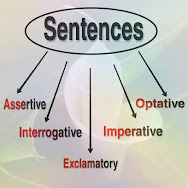
Sentences can also be classified based on their function. A declarative sentence makes a statement or expresses an opinion. An interrogative sentence asks a question. An imperative sentence gives a command or makes a request. An exclamatory sentence expresses strong emotion or excitement.

In addition to the basic components of a sentence, there are many other elements that can be included, such as adjectives, adverbs, prepositions, and conjunctions. These elements help to modify or connect the words in the sentence and give it more nuance and complexity.

 Definitions of "sentence":

1. A grammatically complete unit of language, consisting of one or more words that express a complete thought and typically containing a subject and predicate. 

2. A group of words that expresses a complete thought, declaration, question, exclamation, or command, and that typically ends with a period, question mark, or exclamation point. 

3. A unit of language larger than a phrase but smaller than a paragraph, consisting of one or more clauses and conveying a complete idea or thought. 

4. A series of words that are syntactically linked and convey a complete thought or idea. 

5. A construct that organizes words and phrases into a coherent and meaningful statement or question.  

Types of Sentences


1. Declarative sentences: A declarative sentence makes a statement or expresses an opinion. It ends with a period. For example: "The movie was really good."

2. Interrogative sentences: An interrogative sentence asks a question. It ends with a question mark. For example: "What time is it?"

3. Imperative sentences: An imperative sentence gives a command or makes a request. It ends with a period or an exclamation point, depending on the tone. For example: "Please close the door."

4. Exclamatory sentences: An exclamatory sentence expresses strong emotion or excitement. It ends with an exclamation point. For example: "I can't believe we won the game!"

5. Simple sentences: 
A simple sentence consists of one independent clause, which contains a subject and a verb and expresses a complete thought. For example: "The cat sat on the mat."

6. Compound sentences: 
A compound sentence consists of two or more independent clauses joined by a coordinating conjunction (such as "and," "or," or "but"). For example: "She walked to the store, but she forgot her wallet."

7. Complex sentences: 
A complex sentence consists of one independent clause and one or more dependent clauses. The dependent clause cannot stand alone as a sentence. For example: "Although I like pizza, I am trying to eat healthier food."

In summary, these types of sentences are used to convey different types of information and emotions, and they are constructed in different ways depending on the components that they contain. By knowing the different types of sentences and how to use them effectively, you can communicate more clearly and effectively in written and spoken language.


Tenses and Types of Tenses


Tenses are a crucial aspect of English grammar, and they play a significant role in communication. They are used to indicate the time at which an action takes place, whether it is in the past, present, or future.

There are three main types of tenses: 

1. Present Tense

2. Past Tense

3. Future Tense

Each of these types of tenses can be further divided into four different forms, depending on the nature of the action:

1. Simple Tense

2. Continuous Tense

3. Perfect Tense

4. Perfect Continuous Tense

Let's take a closer look at each of these types of tenses in detail:

1. Present Tense: This tense is used to describe actions that are happening now or are ongoing. It can be further divided into four forms:

a. Simple Present Tense: This tense is used to describe habitual actions or general truths. For example, "The sun rises in the east."

b. Present Continuous Tense: This tense is used to describe actions that are happening now or in the near future. For example, "I am studying for my exam."

c. Present Perfect Tense: This tense is used to describe actions that started in the past and continue up to the present. For example, "I have lived in this city for five years."

d. Present Perfect Continuous Tense: This tense is used to describe actions that started in the past, continue in the present and may continue in the future. For example, "I have been studying for six hours."

2. Past Tense: This tense is used to describe actions that have already happened. It can be further divided into four forms:

a. Simple Past Tense: This tense is used to describe actions that occurred at a specific time in the past. For example, "I went to the store yesterday."

b. Past Continuous Tense: This tense is used to describe actions that were ongoing in the past. For example, "I was studying when the phone rang."

c. Past Perfect Tense: This tense is used to describe actions that occurred before another action in the past. For example, "I had finished my homework before my friend called me."

d. Past Perfect Continuous Tense: This tense is used to describe actions that started in the past and continued up to another point in the past. For example, "I had been studying for two hours before I took a break."

3. Future Tense: This tense is used to describe actions that will happen in the future. It can be further divided into four forms:

a. Simple Future Tense: This tense is used to describe actions that will happen in the future. For example, "I will go to the store tomorrow."

b. Future Continuous Tense: This tense is used to describe actions that will be ongoing in the future. For example, "I will be studying for my exam at this time next week."

c. Future Perfect Tense: This tense is used to describe actions that will be completed by a certain time in the future. For example, "I will have finished my project by next Friday."

d. Future Perfect Continuous Tense: This tense is used to describe actions that will have been ongoing up to a certain point in the future. For example, "By next year, I will have been working at this company for five years."

It's important to note that these different tenses and forms can be combined to create more complex sentences, and it's essential to use them correctly to convey the intended meaning.

Three term lable: Consonants and Vowels

The three-term label is a cornerstone method in phonetics and linguistics for systematically describing every consonant and vowel phoneme i...